

Flathead (Bluespotted)
Note: This content is stored on an archive website and may not be current or accurate. Contact us to clarify.
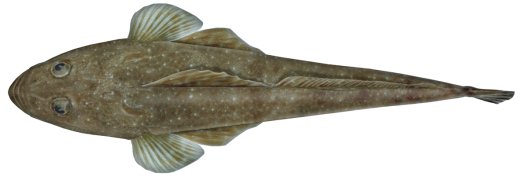
Northern Flathead (Bluespotted)
Scientific name
Platycephalus arenarius
Characteristics
The Northern Flathead has a pale brown body speckled with pinkish-red spots. The caudal fin (tail) is the best way to identify the northern sand flathead, with a pattern of almost horizontal flag-like black stripes across the tail (three distinct black bars on the upper portion and two on the lower portion of the caudal fin). Unlike many other flathead species, the northern sand flathead sporadically appears in schools.
Size
The Northern Flathead is one of the smaller species of flathead, growing to a maximum length of 45 cm (approximately 0.7 kg).
Distribution
The Northern Flathead (P. arenarius), sometimes known as the flag-tailed flathead, is endemic to Australian waters and is commonly found along beaches and in estuaries of Northern NSW. Its range extends through Queensland into the Northern Territory and as far south as Carnarvon in Western Australia. It has been recorded as far south as Jervis Bay on the east coast.
Confusing species
It is easily confused with the Bartail Flathead (P. indicus). The Bartail Flathead has a distinctive yellow blotch on the caudal fin, which the northern sand flathead lacks.
Fishing tips
Trolling or spinning with lures along sand flats or a sand gutter drop-off at the top of the run-out tide is a popular way of targeting most flathead species. These may also be caught drifting over sand flats.
Southern Flathead (Bluespotted)
Scientific name
Platycephalus bassenis
Characteristics
The Southern Flathead has a brownish-grey body speckled with reddish-brown spots. Similar to other flathead species, the caudal fin (tail) is the best way to identify the Southern Flathead. It is recognisable by a large brownish-black blotch on the lower edge, with smaller reddish-brown spots on the upper portion of the caudal fin.
Size
The southern Flathead grows to a maximum length of 55 cm (approx. 1.3 kg).
Distribution
The Southern Flathead (P. arenarius), sometimes known as the slimy flathead or bay flathead, is also endemic to Australian waters. It is common along the beaches and estuaries of southern Australia. Its range extends from Red Rock in Northern NSW through Victoria, Tasmania and South Australia into Western Australia, as far north as Lancelin (most abundant in Victoria and Tasmania). Found in shallow coastal bays to the tidal limits of estuaries and to a depth of up to 100 m.
Confusing species
The southern flathead is often confused with the longspine flathead (P. longispinis) and the blue-spotted flathead (P. caeruleopunctatus). The caudal fin is the best method to distinguish between the various flathead species. Longspine flathead have a pale blue caudal fin, where as the southern sand flathead has a grey-black colouration. The blue-spotted flathead has a single large blotch below five horizontal bars edged with white on the caudal fin. The southern sand flathead has one to two blotches below smaller blotches. The blue-spotted flathead is rarely caught in depths of less than 25 fathoms.
Fishing tips
Trolling or spinning with lures along sand flats or a sand gutter drop-off at the top of the run-out tide is a popular way of targeting most flathead species. These may also be caught drifting over sand flats.