

Manyweathers Weir Removal - Richmond River
The weir formed a barrier even in elevated flows

Manyweathers Weir Removal - Richmond River
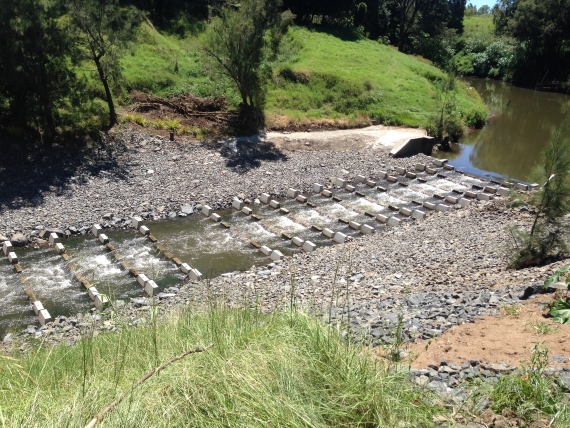
The weir was gradually broken into pieces for removal

Manyweathers Weir Removal - Richmond River
Sections of the weir were removed to allow water levels to equalise

Manyweathers Weir Removal - Richmond River
Weir removal allows for free fish passage

Weeta Weir Removal - Namoi River
The low rock weir and ineffective fishway blocked fish passage

Weeta Weir Removal - Namoi River
The removed weir allows for free fish passage in the Namoi River
Dam and weir removal
Since the construction of many dams and weirs, circumstances and community needs have changed. For example, an alternative water supply may now be available, and an old dam or weir may no longer serve its original purpose. Some of these structures, particularly those near towns, may have developed secondary uses such as recreational and visual amenities for local communities.
Where dams and weirs are no longer serving a useful purpose, their removal is recommended.
Removal of redundant or disused structures is the best remediation option for these structures as it improves conditions for native fish by reinstating an open channel to allow all species and size classes of fish to move at all flows; and improves river ecology by allowing free movement of water and sediment.
The removal of dams and weirs is a complex process that needs to address the requirements of the environment as well as the cultural, heritage and social issues of the community. NSW DPIRD Fisheries works with owners of redundant or disused dams and weirs to have them removed, improving fish passage to hundreds of kilometres of waterways in NSW.

Dam and weir modification
A number of older dams and weirs still serve a useful purpose but need major maintenance or refurbishment. Before significant expenditure is incurred, the owners and the community should consider if the cost would be better spent on an alternative water supply, or upon significant design changes that will reduce the environmental impact of the structure. Such modifications may include the instalment of fishways which improve fish passage. Fishways are a means to allow fish to move upstream past the weir during normal river flows (i.e. prior to the weir being covered with water during flooding and “drowned out").
Benefits
 Removal or modification of barriers to fish passage such as dams and weirs will result in improved stream connectivity, better water quality, increased biodiversity, and enhanced recreational angling benefits.
The removal of instream barriers results in the reclamation of valuable habitat for aquatic fauna and the reinstatement of normal fish migratory processes. Many native fish species have a migratory component within their life-cycles, whether for the purpose of reproduction or for habitat expansion. Migration also acts to increase the genetic diversity of fish populations and improve the genetic health of native fish stocks.