


• Part of  NSW Department of Primary Industries
SEARCH | CONTACT US
Industry and Investment NSW subsite home
Home »  Fishing and aquaculture  »  Recreational Fishing  »  Saltwater fishing

Recreational Fishing

Artificial reefs

Location maps and coordinates

  • Botany Bay
  • Lake Conjola
  • Lake Macquarie – Galgabba Point
  • Merimbula Lake
  • St Georges Basin

The Sydney Offshore Artificial Reef GPS coordinates (WGS84) are:

Latitude - 33°50.797'S
Longitude - 151°17.988'E

Artificial reefs

Artificial reefs have been used extensively around the world to create fish habitat, regenerate damaged ecosystems and to enhance angler catch. Artificial reefs have traditionally been constructed out of waste materials such as car tyres and sunken ships. The use of such materials is no longer considered acceptable for a number of reasons including cost, pollution potential, biological effectiveness and long-term stability in the marine environment. A number of countries world-wide, including Korea, Japan and the USA have developed a variety of purposely designed artificial reef materials that substantially increase the cost-effectiveness, longevity and biological suitability of modern artificial reefs and greatly improve the environmental outcomes.

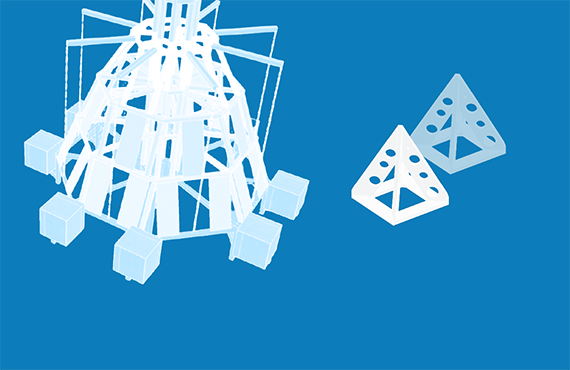
The DPI NSW Artificial Reefs project is a major part of the Recreational Fisheries Enhancement Program and is made up of two separate components, Estuarine Artificial Reefs (EARs) and Offshore Artificial Reefs (OARs).

Offshore Artificial Reefs (OARs)

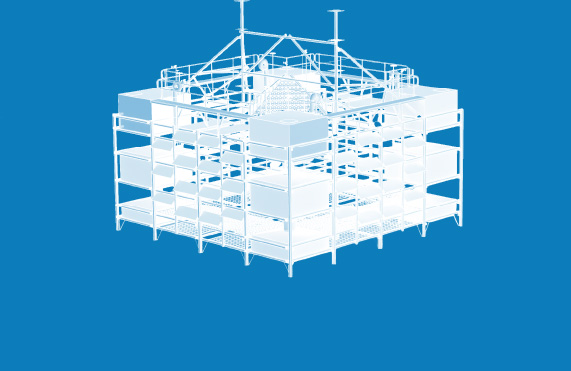
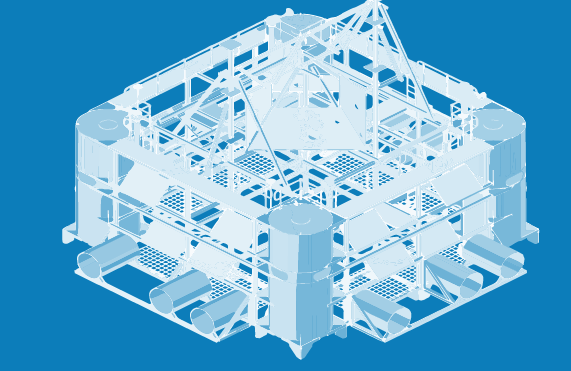
In October 2011, DPI deployed the States first offshore artificial reef to improve recreational fishing opportunities. The structure was deployed approximately 1.2 km east of ‘The Gap’ (South Head) in 38 m of water. 

The reef was deigned and constructed using funds from the Recreational Fishing Trusts.

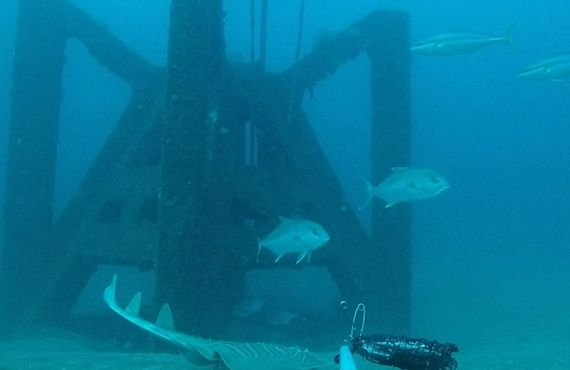
The offshore unit is the first Australian designed artificial reef and is the largest purpose built individual artificial structure to be deployed in the country.. It weighs over 40 tonnes, stands 12 m at its highest point and has a reef volume in excess of 700m3. It is designed to not only withstand the high energy NSW coastal conditions, but also to remain intact for a minimum of 30 years. However the reef is expected to continue to work for much longer than this.

The artificial reef structure will be monitored by NSW DPI scientists for three years using diver surveys and advanced underwater video technology to assess the impacts and effectiveness of the reef.

More information about the project and fishing the offshore artificial reef can be found by downloading the Offshore Artificial Reef User Guide 2.7 Mb or contact NSW DPI on (02) 9527 8411, or email: fisheries.FADs@industry.nsw.gov.au.

The artificial reefs GPS coordinates (WGS84) are:

Latitude - 33°50.797'S
Longitude - 151°17.988'E

  • Environmental Management and Monitoring Plan 785Kb
  • Offshore Artificial Reef Video
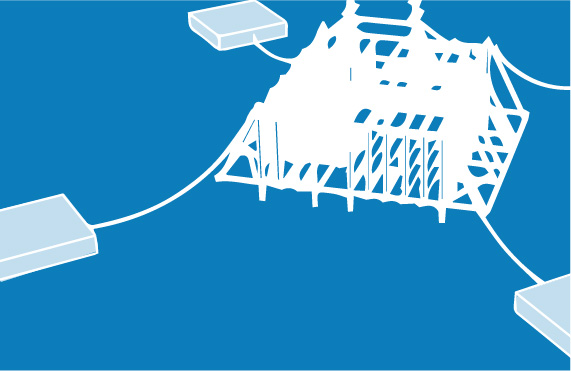
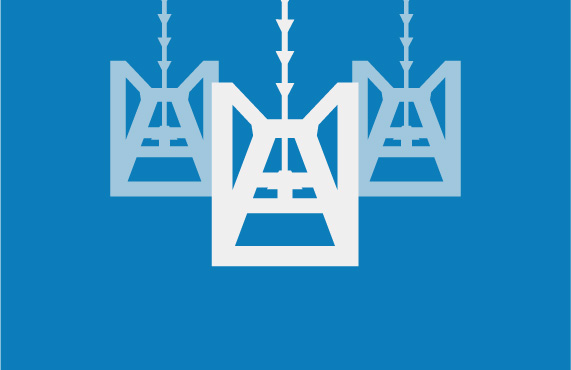
  • Reef construction and installation video

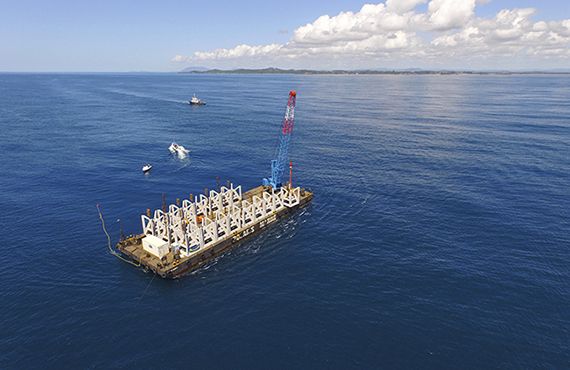
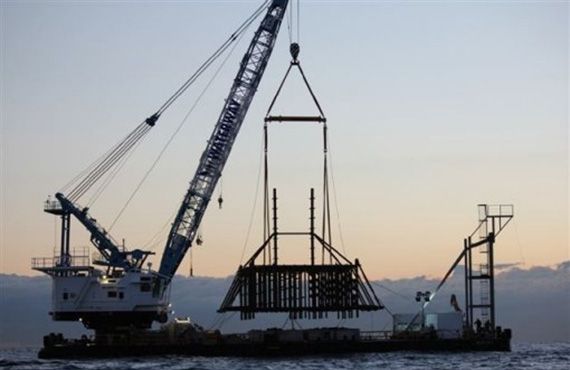
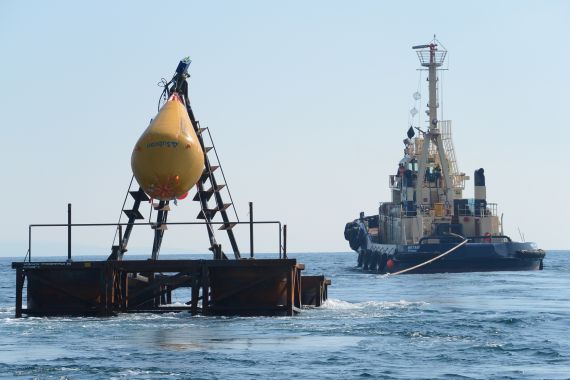
Barge and reef on site

Barge and reef on site

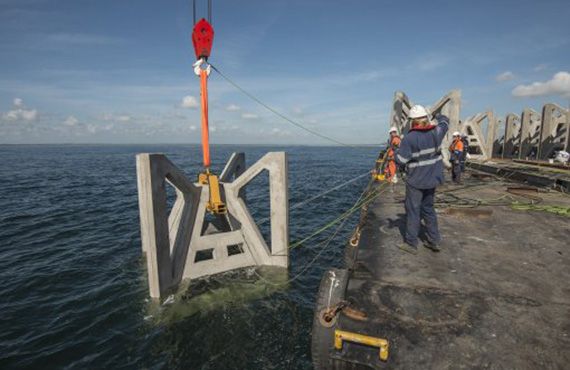
Reef unit being lifted

Reef unit being lifted

Reef unit in the water

Reef unit in the water

Artificial reefs

Initial proposed OAR location (red) and final OAR location (blue) for the Sydney region.

Estuarine Artificial Reefs (EARs)

The Department began to assess the viability of constructing artificial reefs in NSW estuaries to enhance recreational fishing opportunities in 2005. A precautionary approach was adopted, with a small number of artificial reefs constructed in three Recreational Fishing Havens, including Lake Macquarie, Botany Bay and St Georges Basin, between 2005 and 2007. The reefs were constructed of ‘Reef Balls’ which are specially designed concrete modules developed in the United States which promote marine growth and provide fish with a complex, almost natural habitat. Three years of detailed scientific monitoring of the reefs showed that the artificial reefs were effective at providing new reef habitat for a high diversity of fish species and had limited impact on existing habitats. The results also showed a number of unusual, highly sort after sport fish were moving back into the areas to make use of the newly deployed artificial reefs.

Artificial reefs

Dusky flathead on the Botany Bay artificial reef

Following the success of the pilot reefs, the program was expanded into other estuaries. Larger artificial reefs using Reefballs were created in Lake Conjola (400 Reef Balls, representing a reef volume of 160 m3 distributed over an area of 2100 m2) and Merimbula Lake (400 Reef Balls, representing a reef volume of 160 m3 covering approximately 3500 m2).

Artificial reefs

Fish schooling around a large reef ball in Lake Conjola, 6 months after the reefs deployment in November 2008

Artificial reefs

A school of large yellowfin bream on the newly deployed Merimbula Lake artificial reef in May 2009

Artificial reefs

Schooling yellowfin bream in the St Georges Basin pilot artificial reef 15 months after the reef deployment

The largest EARs project was completed in September 2009, where the very first I&I NSW artificial reef at Lake Macquarie was significantly expanded. This reef now comprises 600 Reef Balls, with 200 m3 of artificial reef over an area of 3000 m2. The most recent EARs project was the significant expansion of the Botany Bay artificial reef site at Yarra Bay.

Artificial reefs

Monitoring the Artificial Reefs using Baited remote Underwater Video - BRUV

This site was originally constructed from just 30 Reef Balls, however during May of 2010 an additional 200 ‘Pallet’ sized Reef Balls were deployed. This represents phase one of the expansion project at Botany Bay, with phase two being an additional 200 Reef Balls.

Artificial reefs

Commercial diver manoeuvring a Reef Ball into position during the Lake Macquarie artificial reef expansion project in September 2009

When completed, the expanded reef will be spread across approximately 2000 m2 of seabed, and provide approximately 350 m3 of fish habitat.

Artificial reefs

Schools of yellowfin bream just 2 days after deploying the Reef Balls in Botany Bay

Artificial reefs

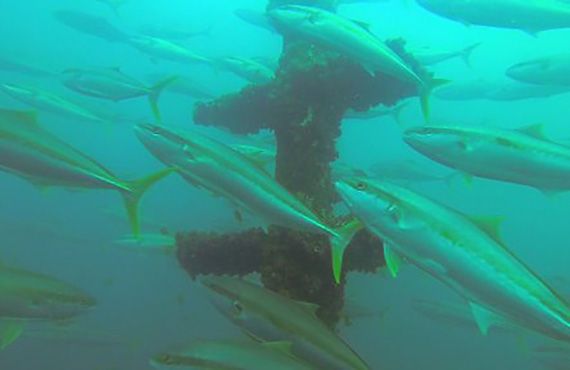
Trevally, yellowtail scad and yellowfin bream were quick to inhabit the new artificial reef

Latest updates

  • Offshore Artificial Reefs (Newcastle, Sydney & Wollongong) EA/Draft PER - Submissions Report 460Kb
  • The Botany Bay artificial reef has been significantly expanded. Visit the map for location details

Outputs

  • Artificial reefs outputs
  • Recreational fishing licence fee
  • Licence fees at work
  • Fishing rules and regulations
  • Saltwater fishing
    • Artificial reefs
    • Catch and release fishing
    • Common recreational species
    • Crab traps - preventing turtle drownings
    • FADs
    • How to weigh your fish with a ruler
    • Humane harvesting of fish
    • NSW DPI Game Fish Tagging Program
    • Recreational fisheries enhancement program
    • Safety
    • Saltwater Fishing Guide 2012
    • Saltwater rules and regulations
    • Spearfishing in NSW
  • Freshwater fishing
  • Publications
  • Contact us
Accessibility | Privacy | Copyright | Disclaimer | Feedback | Report a problem
NSW Government | jobs.nsw